
High-protein meal plan: 7 days of ordinary food
Last reviewed
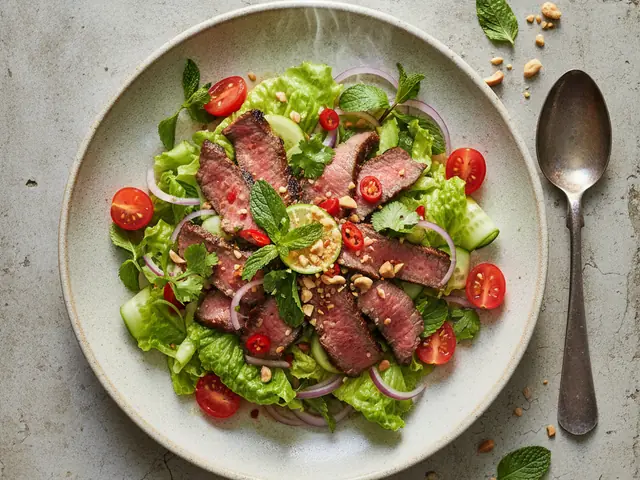
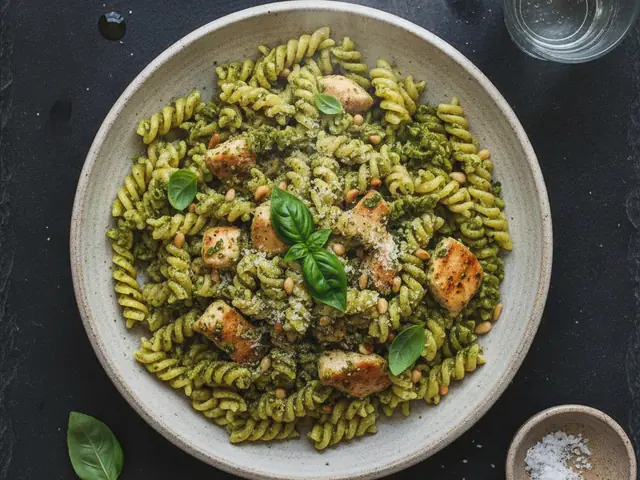
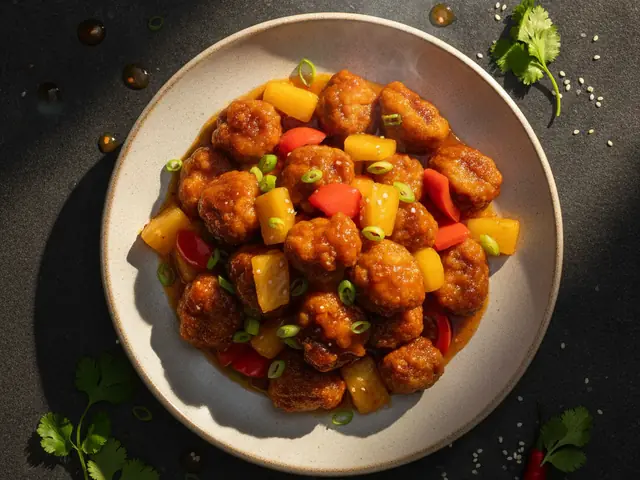
This 7-day meal plan averages about 127 g of protein a day from three meals, without powders or shakes. Breakfast is eggs, fish or meat; dinner is Thai beef salad, prawn linguine and pesto chicken pasta and four more with at least 35 g a serve; and lunch is last night's dinner. The figures come from the Australian Food Composition Database.
7 dinners
Lunch is last night's leftovers
Set for 2 people; change it below
35 min
Longest weeknight dinner
Monday to Friday
127 g
Protein a day, on average
6,843 kJ a day, per person, from three meals
The week
Each dish links to its recipe. Figures are per person, for the three meals only.
| Day | Breakfast | Lunch (leftovers) | Dinner | Energy | Protein |
|---|---|---|---|---|---|
| Monday | Bacon & Egg Muffin | Chicken Parmigiana | Thai Beef Salad | 6,127 kJ | 140 g |
| Tuesday | Smoked Salmon Scrambled Eggs | Thai Beef Salad | Prawn Linguine | 5,828 kJ | 123 g |
| Wednesday | Bacon & Egg Muffin | Prawn Linguine | Pesto Chicken Pasta | 6,874 kJ | 106 g |
| Thursday | Smoked Salmon Scrambled Eggs | Pesto Chicken Pasta | Salmon Teriyaki | 8,209 kJ | 120 g |
| Friday | Bacon & Egg Muffin | Salmon Teriyaki | Sweet & Sour Pork | 6,860 kJ | 101 g |
| Saturday | Steak & Eggs | Sweet & Sour Pork | Spaghetti Bolognese | 6,035 kJ | 128 g |
| Sunday | Savoury Mince on Toast | Spaghetti Bolognese | Chicken Parmigiana | 7,971 kJ | 167 g |
Shopping list for the week
Every recipe in the plan, scaled to how many people you're feeding and added up by aisle. Check the fridge and pantry before you go: you'll already have some of it.
For 2 people: 7 breakfasts and 7 dinners, with each dinner doubled so it's lunch the next day.
Fruit and veg
- capsicum2
- carrot1
- cherry tomatoes200 g
- chilli4
- coriander10 g
- cucumber2
- garlic8 cloves
- greens200 g
- lemon2
- lime2
- mint10 g
- onion2
- parsley13 g
- pineapple200 g
- salad leaves240 g
Meat and seafood
- bacon180 g
- beef mince900 g
- beef steak800 g
- chicken400 g
- chicken breast800 g
- pork530 g
- prawns530 g
- salmon fillet600 g
- sirloin steak300 g
- smoked salmon240 g
Dairy
- butter40 g
- cheese6 slice
- cream80 ml
- mozzarella240 g
- parmesan70 g
Eggs
- egg8
- eggs16
Bakery
- bread4 slice
- breadcrumbs200 g
- English muffin6
- sourdough4 slice
Pantry
- canned tomato200 g
- canned tomatoes400 g
- cornflour20 g
- fish sauce30 ml
- honey40 g
- ketchup60 g
- linguine400 g
- mirin60 ml
- olive oil40 ml
- pasta400 g
- pesto160 g
- plain flour80 g
- rice670 g
- rice vinegar40 ml
- soy sauce110 ml
- spaghetti300 g
- tomato paste30 g
- tomato sauce500 g
- vegetable oil30 ml
- white wine80 ml
- Worcestershire sauce20 ml
Counted items (eggs, lemons, onions) are rounded up to whole ones. Water isn't listed, and nor are salt and pepper where the recipe doesn't measure them.
This week's dinners
Thai Beef Salad
Monday: beef steak, cucumber and salad leaves
25 min
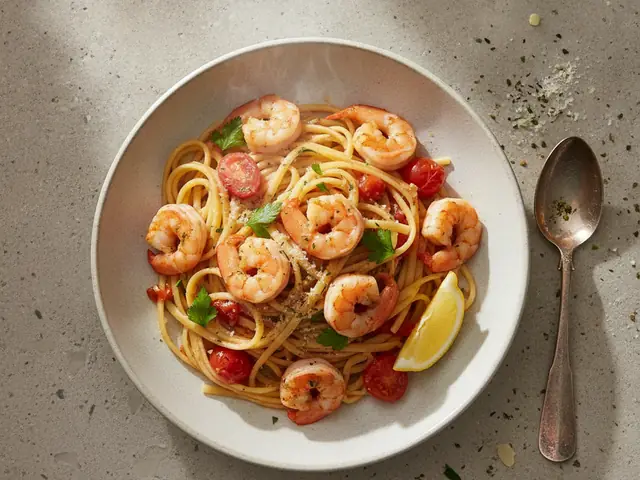
Prawn Linguine
Tuesday: prawns, linguine and lemon
25 min
Pesto Chicken Pasta
Wednesday: pasta, chicken and cherry tomatoes
20 min
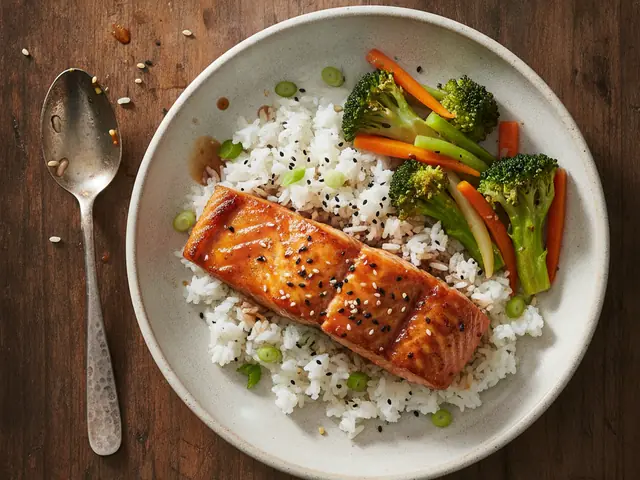
Salmon Teriyaki
Thursday: salmon fillet, rice and greens
25 min
Sweet & Sour Pork
Friday: pork, capsicum and rice
35 min
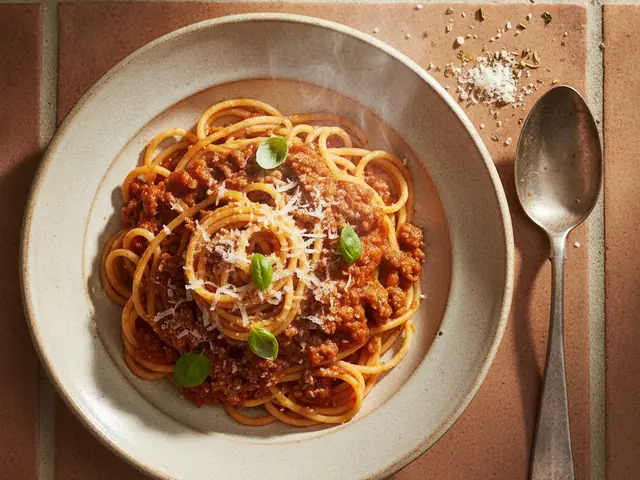
Spaghetti Bolognese
Saturday: beef mince, canned tomatoes and spaghetti
1 h
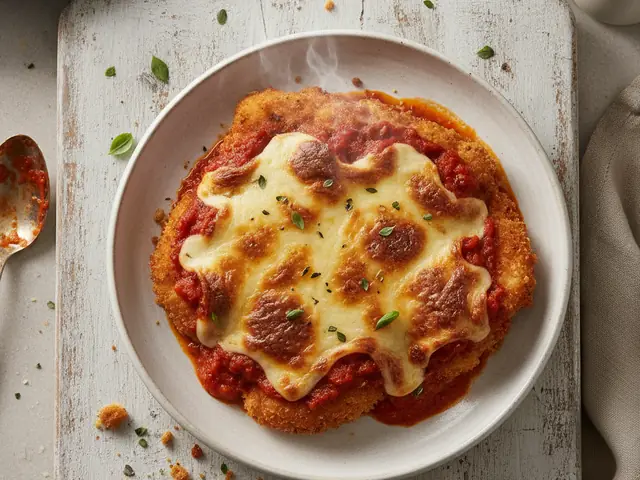
Chicken Parmigiana
Sunday: chicken breast, tomato sauce and mozzarella
45 min
Where the protein comes from
Every dinner has at least 35 g of protein a serve, and every breakfast at least 20 g, with a fifth or more of each dish's energy coming from protein. Because lunch is a second serve of the dinner, the dinners do most of the work. The breakfasts are bacon & egg muffin and smoked salmon scrambled eggs on weekdays, and steak & eggs and savoury mince on toast at the weekend.
The daily totals in the table are for one person and three meals. They don't include snacks, drinks or sides, so your real day will be higher. How much protein you need depends on your age, size and activity; this plan doesn't set a target.
Cook once, eat twice
Each dinner is cooked for twice the people, and the second half is the next day's lunch, so Monday's lunch is Sunday's chicken parmigiana. It halves the cooking and means lunch is never a last-minute sandwich. Food Standards Australia New Zealand's advice for leftovers: cool them quickly, for example in shallow containers in the fridge; keep perishable food at 5°C or colder; use leftovers within a few days; and reheat them quickly until piping hot.
Breakfasts
Weekdays alternate between two quick breakfasts, each 15 minutes or less: bacon & egg muffin and smoked salmon scrambled eggs. At the weekend there's time for steak & eggs and savoury mince on toast.
Swaps
Swap any dinner for another from the high-protein recipes collection; each one there meets the same protein rule.
How we built this plan
Every dinner has at least 35 g of protein a serve and every breakfast at least 20 g, with at least a fifth of the energy from protein. Weeknight dinners take 40 minutes or less, and the weekend can take longer. No main ingredient leads more than two dinners. Within those rules we picked the dishes Australians search for most, and avoided repeating another plan's dinners. Every dish has published nutrition figures, so each day has totals, and every one is in the PlanNplate app.
Questions
How much protein is in this meal plan?
About 127 g a day on average from breakfast, lunch and dinner, for one person. The day-by-day figures are in the table.
What are high-protein dinners in this plan?
Thai beef salad, prawn linguine, pesto chicken pasta, salmon teriyaki, sweet & sour pork, spaghetti bolognese and chicken parmigiana. Each has at least 35 g of protein a serve.
Is this a weight-loss meal plan?
No. It's a week of everyday meals with more protein than most. We don't make claims about weight; for personal advice, see your doctor or an Accredited Practising Dietitian.
Sources
- Food safety basics, Food Standards Australia New Zealand (cooling, keeping and reheating leftovers, and keeping food at 5°C or colder)
- Australian Food Composition Database – Release 3, Food Standards Australia New Zealand, CC BY 4.0 (energy and nutrients per 100 g of each ingredient)
- AUSNUT 2023 – Food measures, Food Standards Australia New Zealand, CC BY 4.0 (the weight of a medium onion, a lemon, an egg and other counted ingredients)
How we turn these sources into the numbers on this page: how we calculate.